On March 24, 1906, a fire that began upstairs in the Pioneer Hotel soon swept through four acres of the town, consuming Wrangell’s most prominent businesses. From the ashes, a new Wrangell emerged.
A view of the north end of Front Street taken from the Mount Dewey overlook. Wrangell, Alaska circa 1904. (image credit: Wrangell Museum 1975.002.004)
Boardwalk Boomtown
BY THE SPRING OF 1906, the boom of the Klondike Gold Rush had worn off, but Wrangell was forever changed. Thousands of gold-miners had stopped through Wrangell on their way up the Stikine River to the Klondike. Few made it, and most left empty-handed. For most, the gold rush was a bust, but the merchants, the pockets of gold-miners was a goldmine in itself. Businesses, warehouses, and homes sprung up in Wrangell to meet the new traffic. Even with the gold rush cooling off, Wrangell’s civic leaders remained optimistic that another lucky strike was on the horizon.
A view of Wrangell from the water showing the original Fort Wrangel buildings on the hillside to the left, Robert Reid’s warehouses in the center, and the Wrangell Hotel to the right. (image credit: Wrangell Museum 1965.012.035)
Walking Front STreet
Reid’s Wharf. If you arrived in Wrangell in 1906, you would have likely come aboard a steamship from a city like San Francisco, Seattle, or Victoria. The ship would have tied up at the wharf at the north end of the town. As you walked down the wooden planks, you would have seen two long warehouses owned by the dock’s owner, Robert Reid. (2026 Location: NAPA Auto Parts).
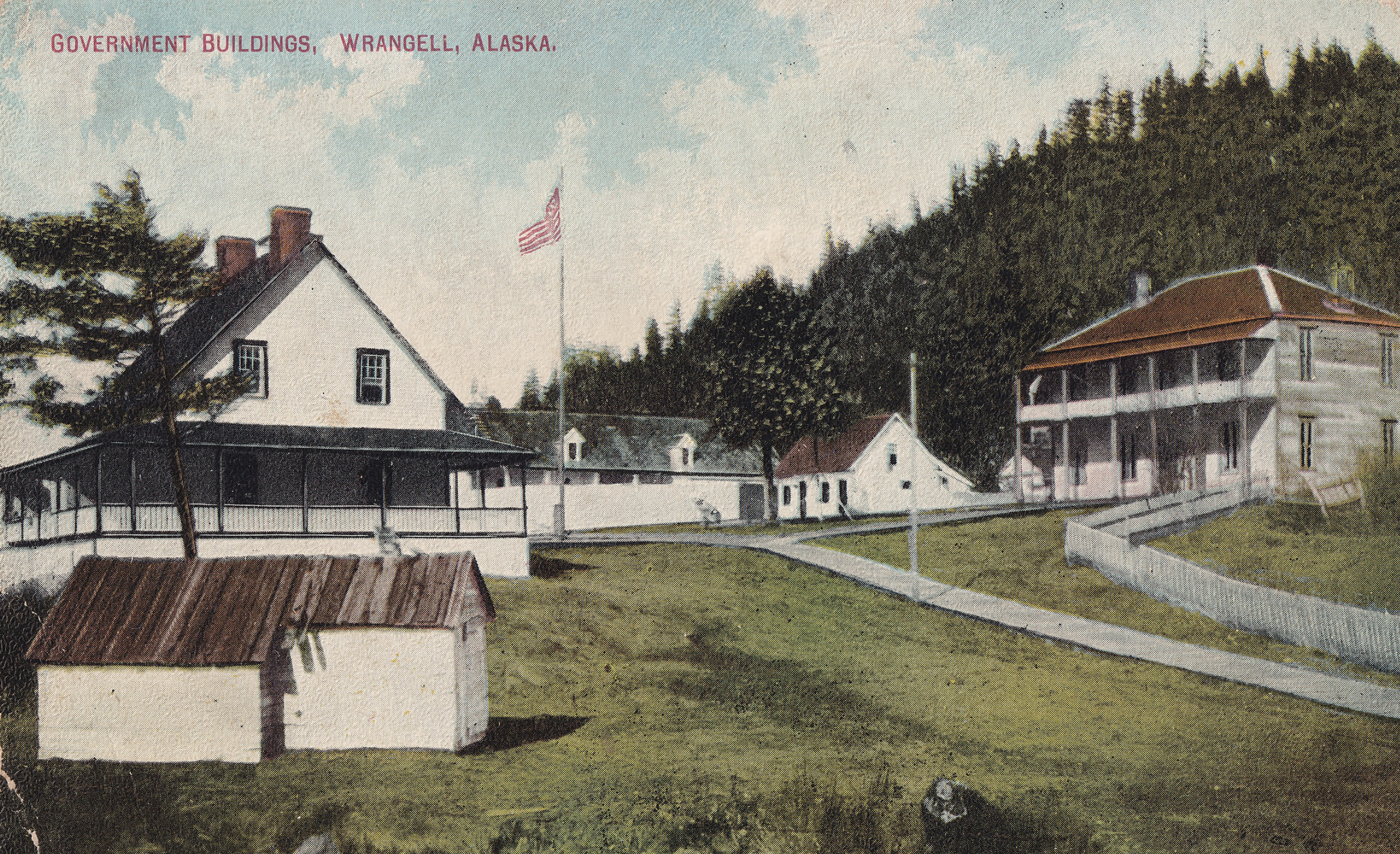
An early 1900s photograph of the original Fort Wrangel buildings. Customs House on the left, Court House on the right, and jail in the center.
Government Reserve. To your left, up the hill, you could see the buildings of the original Fort Wrangel. These buildings were constructed in 1868 when the U.S. Army first arrived. Even in 1906, these were historic landmarks. They had served in many capacities, but by this time they were used as government buildings, such as a customs house, courthouse, and jail. (2026 Location: U.S. Post Office).
Sylvester House. The two-story home of the late Rufus Sylvester sat close by to the original fort buildings, just slightly down the hill. Sylvester, along with his late partner Thomas Willson, were responsible for the large sawmill operating near the north end of the town.
(image credit: Wrangell Museum 1992.012.006)
Fort Wrangel Hotel. To your right, you would see the Fort Wrangel Hotel, owned by John Goodwill Grant, a Canadian immigrant who arrived during the Klondike Gold Rush. At three stories tall, Grant’s hotel was a tribute to modern Victorian architecture, with a prominent cupola on the corner overlooking Front Street. (2026 Location: Structure, formerly Ottesen’s Extension)
Pioneer Hotel. Across the street, Grant co-owned the Pioneer Hotel with his father-in-law, Irish immigrant Fred Lynch. Older and less stylish than the Fort Wrangel Hotel, it was still a serviceable hotel. Both of Grant’s establishments offered places for groups to gather and drink. (2026 Location: Northern half of Buness Brothers).
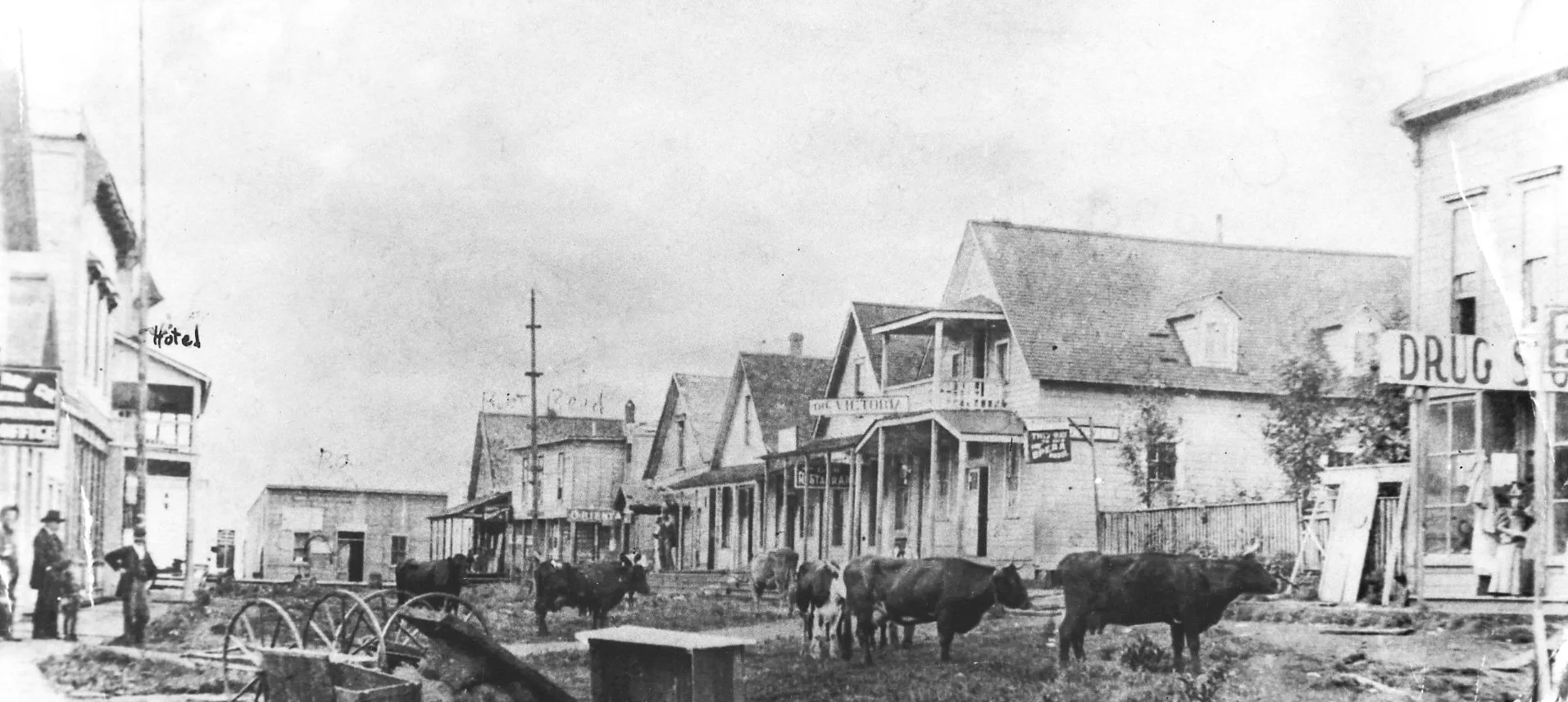
A view of the north end of Front Street in Wrangell, Alaska several years before the fire of 1906. Cows are shown grazing in the foreground. (image credit: Wrangell Museum 2006.034.003)
Olympic Restaurant & Dairy. The first building south of the Pioneer Hotel was Danish immigrant P.C. Jensen’s Olympic Restaurant & Dairy. Since Wrangell incorporated as a city in 1903, Jensen had been Wrangell’s first and only mayor, having been re-elected to three terms in office. By the middle of March 1906, he would would have been focused on elections at the beginning of April. (2026 Location: Alaska Power & Telephone)
Patenaude’s Barber Shop & Cigar Store. For men who could afford finer things, Canadian immigrant Leo Patenaude operated a Barber Shop & Cigar Store next to Jensen’s restaurant. While everyone commonly called the alleyway behind his business Cow Alley, Patenaude attempted to elevate the name’s standing by calling it the more elegant “Paradise Alley” in 1905. The name did not catch on. (2026 Location: Wrangell Dental Clinic)
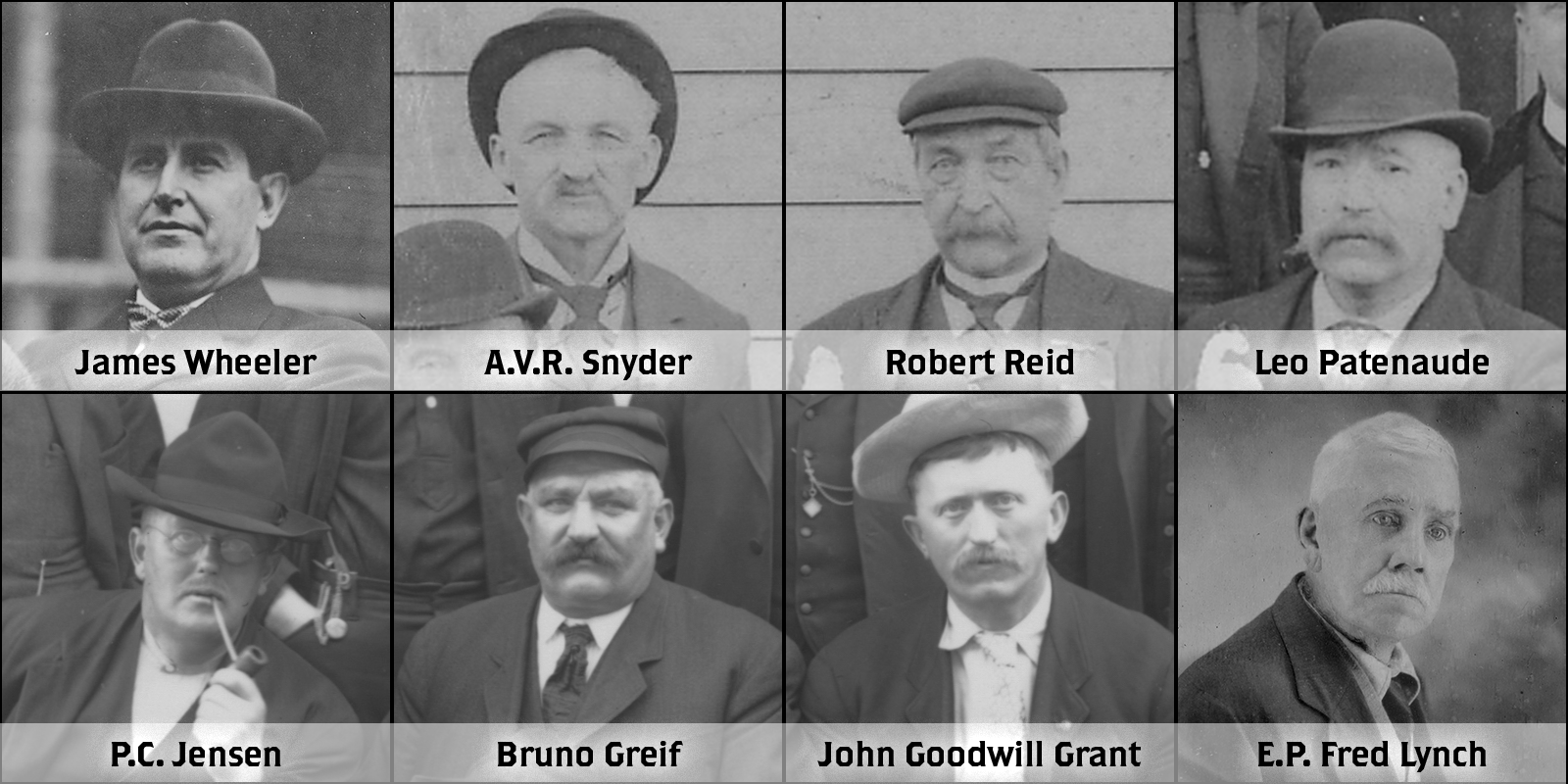
Headshots of the leading businessmen on Front Street. Top row (L-R): James Wheeler (Wrangell Museum 2004.005.115); A.V.R. Snyder, Robert Reid, and Leo Patenaude (Wrangell Museum 1991.013.006). Bottom row (L-R): P.C. Jensen, Bruno Greif, and John Goodwill Grant (Wrangell Museum 1992.025.015); E.P. Fred Lynch (Wrangell Museum 1981.002.008).
Cow Alley. Behind this row of Front Street businesses, you would find an alleyway narrow enough to fit a few passing cows. This area of the town was full of houses, cabins, and shelters put in a hurry to meet the demand during the Klondike Gold Rush. The narrow separation made passing among the homes difficult. These dwellings extended up the hill to Church Street. Many merchants also lived inside their buildings, making Front Street more than a place of business. It was a home.
Opera House. The largest structure you would see behind Cow Alley was the 110ft by 60ft Fort Wrangel Opera House. During the Klondike Gold Rush, the Opera House hosted performances and parties. By 1906, its stage had grown quiet and its owners failed to pay their property fees. (2026 Location: Wrangell Senior Center)
A patriotic gathering on Front Street in Wrangell, Alaska looking south. (image credit: Wrangell Museum 1980.013.051)
U.S. Saloon. After walking about 1,000 feet down Front Street, you would have encountered a slight bend in the road to the right. Sitting conspicuously at the bend in the road was M.R. Rosenthal’s U.S. Saloon, a compact, single-story building with a false-front facade that gave the structure a squarish look. (2026 Location: Southern end of Ottesen’s Ace Hardware.)
Wheeler’s Drug Store. A few businesses down from the U.S. Saloon, James Wheeler operated a pharmacy, with a large banner out front that advertised “DRUGS.” Wheeler, a Louisianan by birth, was one of the few merchants on Front Street not born outside of the United States. During the Klondike Gold Rush, Wheeler reportedly became known as the “Cat Man of the Yukon” for collecting stray cats in Seattle and selling them to dancehall girls in the north for as much as $300 each.
The City Store. Across from the U.S. Saloon, Scottish immigrant Donald Sinclair operated a general store which advertised everything from fresh fruit to boots, hardware, and clothing. (2026 Location: Elks Lodge)
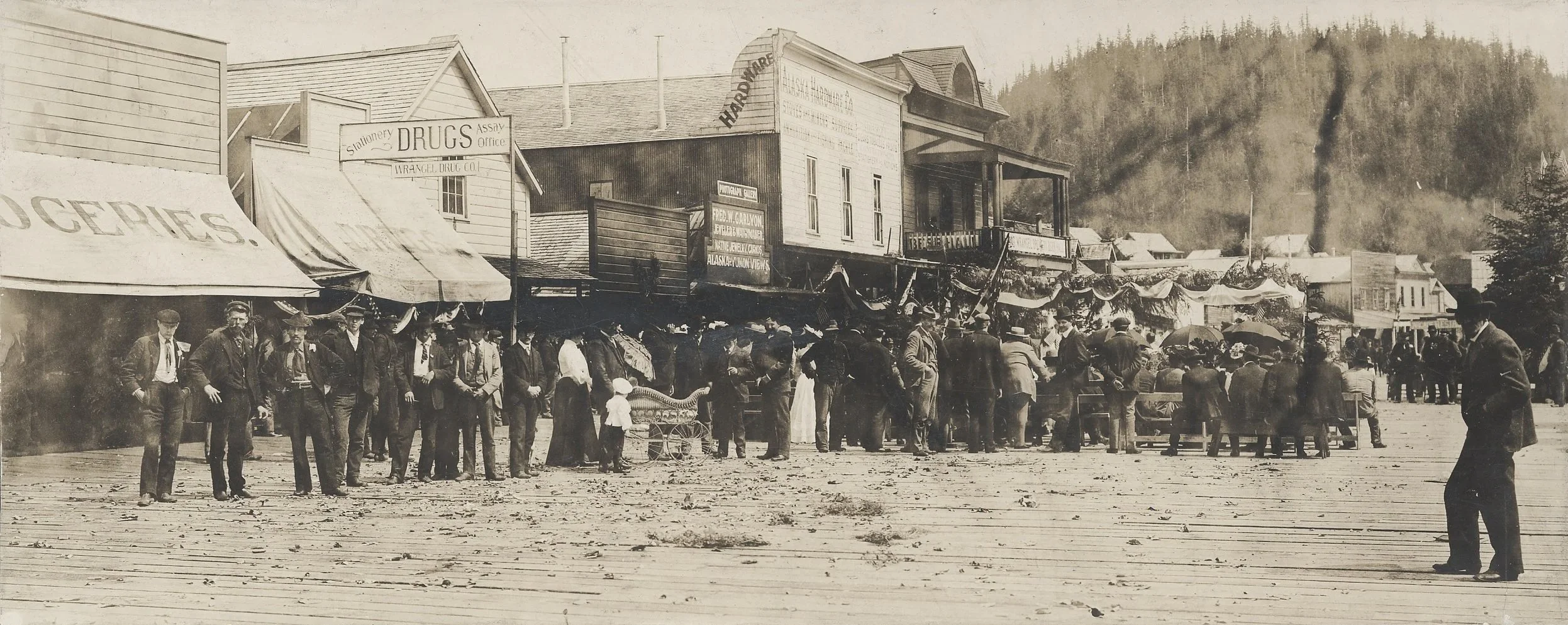
Another view from the image above of the patriotic gathering on Front Street, with businesses in the background: groceries, drug store, Carlyon’s store, St. Michael’s Trading Co., and Bruno Greif’s Beer Hall. (image credit: Wrangell Museum 1975.002.001)
Carlyon’s Photo Gallery. Fred Carlyon operated a store at the north corner of Front Street, leading up to the Government Reserve. But Carlyon also operated a small shop down Front Street which featured his collection of photographs and Native curios. In the month of March 1906, Carlyon was making major life changes: he sold half of his business interests to newcomer Farquhar Matheson. (2026 Location: Rayme’s Bar, formerly The Totem Bar.)
Two men feed bear cubs from bottles. In the background, the blurry sign of Fred W. Carlyon’s photo gallery rises above Front Street. (image credit: Michael & Carolyn Nore Collection)
St. Michael’s Trading Company. Carlyon’s neighbors to the south were the St. Michael’s Trading Company, a large two-story building filled to the brim with goods and supplies for locals and visitors alike. (2026 Location: The Wolf Shack, formerly J&W’s).
A view of Wrangell’s Front Street looking north in 1905. In the immediate background, the Red Men’s Lodge is under construction. In the distance, the skyline of the original Wrangell Front Street is visible. (image credit: Michael & Carolyn Nore Collection)
Bruno Greif’s Beer Hall & Redmen’s Lodge. Next to St. Michael’s Trading Company was a stylish two-story building with an elevated front balcony that served as a Beer Hall for German-immigrant Bruno Greif. Greif was popular, especially among the members of the newly formed white men’s social club, The Improved Order of Red Men. In 1905, Greif paid for the construction of a brand-new Red Men’s Lodge across the boardwalk from his beer hall. (2026 Location: The Beer Hall is now Cooper’s Corner)
Kaachxana.áakʼw. As you moved south down Front Street, you would begin noticing more Tlingit-style homes. You would eventually pass totem poles like the Kiks.ádi Totem Pole constructed in 1895. You might meet Skak-Ish-Tin, a Tlingit woman reportedly over 100 years-old who often posed for photographs in front of her home.
Kadashan’s house and totem poles surrounded by lose plank boards. (image credit: Harvard Archives)
Willson & Sylvester Sawmill. In this area of the town, you could see the home of Kadashan. It was an elegant, two-story Victorian home with two large totem poles out front. This was the ancestral land of the Khaasx’agweidí clan. By 1906, the land around it had been swallowed up by the Willson & Sylvester Sawmill. Stacks of plank boards lay everywhere, surrounding homes, littering the ground, and drifting into the sea. (2026 Location: Wrangell Marine Service Center)
This timber had created the conditions for Wrangell’s growth. It was also becoming a hazard. In February 1906, an editorial in the Alaska Sentinel threatened,
“Now, we wish it distinctly understood that if some action is not taken in the way of cleaning this town up, we intend to bring the matter to the attention of the post office department in which event we will clean up or have our mail service stopped. That will mean a loss to everyone, but we were going to fight it out on this line if it takes all summer.”
Blessed with abundant timber from the Willson & Sylvester mill, Wrangell had been built in a hurry and with little oversight. Wrangell aspired to be a leading city, but it could not shake the ramshackle appearance of an overgrown gold rush camp. With growth came clutter and garbage, and with it, the risk of fire. It was a lesson Wrangell had learned the hard way and taken to heart.

The Alert Fire Company
It all began with a pile of burning trash. On the night of December 11, 1902, a pile of flaming rubbish came flying from the household of the Cagle family. Neighbors began shouting and coming from all directions to fight the blaze, but it was over in a flash. The alarm served as a wake-up call. Wrangell had no fire department of any kind. The assembled crowd counted among themselves six buckets, a fire extinguisher, shovels, tongs, hammers, and other tools. “Right there was shown the necessity for a fire company,” wrote the editor of the Alaska Sentinel, who never missed an opportunity for civic boosterism.
One month later, on January 14, 1903, twenty-one men founded the Alert Fire Company. A visitor to Wrangell shortly after the group formed lamented, “A remarkable feature of the town is the total lack of fire protection, there being absolutely no facilities outside of the ‘bucket brigade’ to protect eleven mercantile stores from fires.” To purchase equipment, the fire company held fundraisers. Later that year, Wrangell formally incorporated a city, and its first mayor, P.C. Jensen, declared his desire to install “fire plugs,” known today as fire hydrants. Mayor Jensen wanted 25 fire plugs for Front Street, while the editor of the Alaska Sentinel countered that “the town does not require the half of it.”
The threat of fire was a fact of life, and it was not far from anyone’s mind. The fire of March 24, 1906 would put the Alert Fire Company to the test.
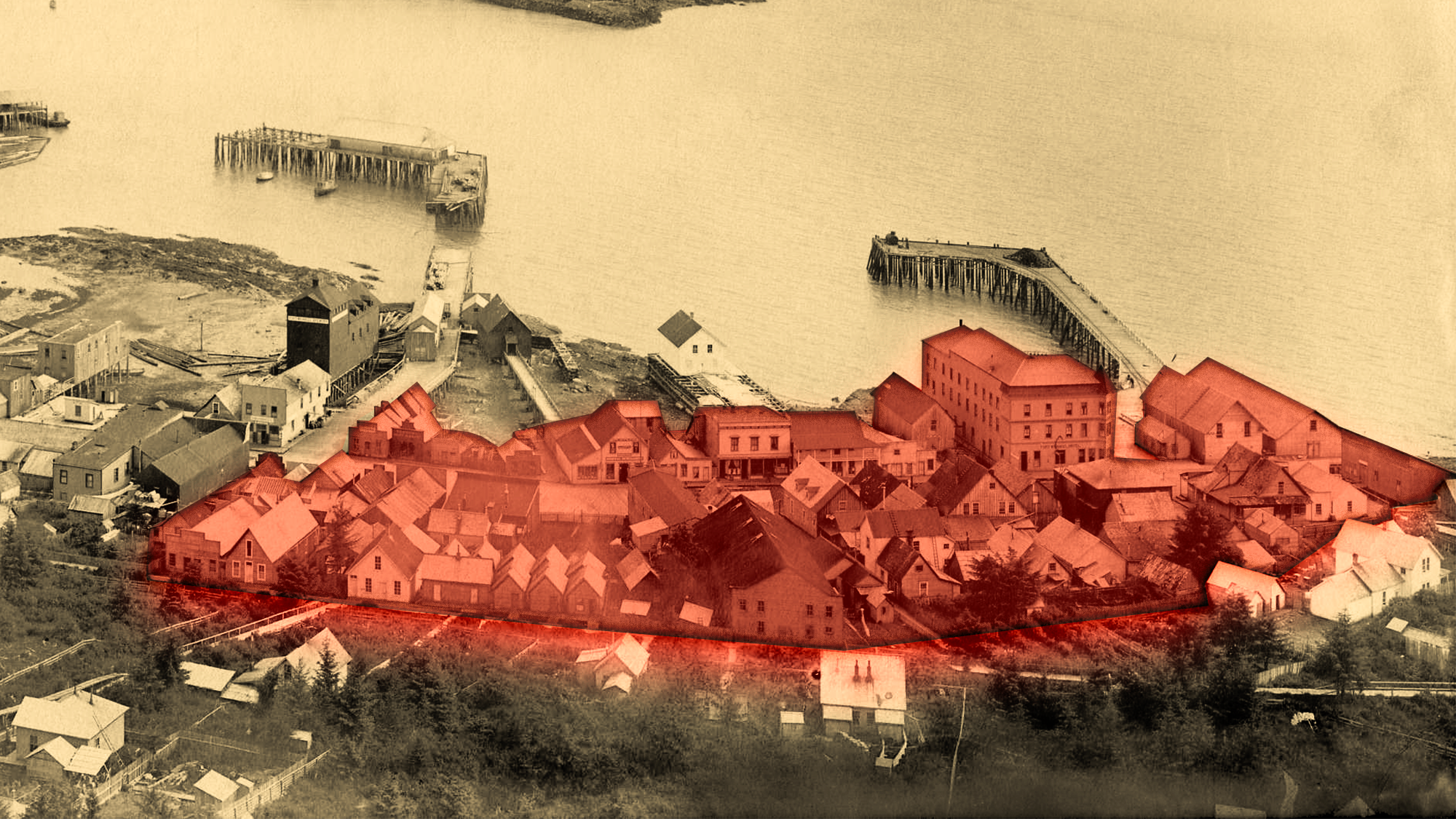
A view of Front Street in Wrangell, Alaska circa 1904, showing the area destroyed by the 1906 fire in red. (image credit: Wrangell Museum 1975.002.004)
The Fire of March 24, 1906
March 24, 1906 was a Saturday. The sun rose at 6:54am to the sounds of seagulls and ravens, barking dogs, and hand carts rolling down the boardwalk of Front Street. By noon, the sun hung high in the air above clear skies, and the high tide swirled among pilings as it began to go out. The steamship Jefferson sat at Robert Reid’s wharf until about 4pm, when it cast off and left Wrangell, unaware of disaster it was leaving behind.
What sparked the fire has never been clear. It began in a room upstairs in the Pioneer Hotel, likely a private room where an unattended cigar, candle, or lamp could burn at length before it was noticed. According to the sources, the fire was not caught by anyone inside the building — the alert came from outside. According to the Alaska Sentinel:
“Shortly after 4 o’clock Saturday afternoon smoke was seen hissing from one of the rooms on the second floor of the Pioneer Hotel, and an alarm of fire was quickly sounded. The citizens turned out soon and every possible effort was put forth in an attempt to squelch the fire and thereby save the burning building and adjoining ones.”
The Pioneer Hotel was sandwiched between two taller buildings, ensuring that the hotel’s rising flames would lap the sides of its neighbors and pass along.
Lynn Worden Holmes was a young girl in Wrangell when the fire broke out. The Wordens lived in a home behind the north end of Front Street, not far from the Sylvester House and the Government Reserve. Years later, Holmes wrote “Sourdough, Lucy Ware,” a pseudo-autobiography of her time in Wrangell. Holmes recalled:
“At that moment, Lucy saw. A thick column of smoke was pouring from the upper windows of the Eagle [Pioneer] Saloon! As she came closer, she saw what was really happening on the saloon roof. Men were up on ladders. Some had already gained the roof and were tearing off the shingles and spreading dripping blankets over the places still free from fire...”
The attempts at putting out the fire in the Pioneer Hotel had been unsuccessful. The fire now advanced in three directions: to the left, to the right, and to the rear. Eventually, rescuers gave up on fighting the blaze in the Pioneer Hotel and moved to one of the new fronts of the battle.
By now, Front Street was full of people running in every direction. Some people attempted to battle the blaze. Others attempted to rescue property. And still, others had no other place to go, as their homes were already destroyed and any place they might take refuge could become the fire’s next target. According to the Alaska Sentinel, many women worked with “superhuman endurance and strength” rushing among the mayhem, delivering drinking water and food, along with attempting to rescue items from the flames.
The Pioneer Hotel’s neighbor to the south, the Olympic Restaurant, went up like a torch. Then Leo Patenaude’s Barber Shop and Cigar Store went up in smoke. At the same time, the fire was moving up Front Street where it incinerated businesses like the Alaska Sentinel newspaper and F.W. Carlyon’s General Store.
On one side, the U.S. Post Office sat precariously in the path of the oncoming blaze. Despite the threats to his family home, J.E. Worden worked furiously to rescue items from the Post Office building. On the other side, just up the hill, the original fort buildings from 1868 overlooked the greatest destruction seen in generations. Rescuers reportedly worked feverishly to save the fort buildings.
By this time, nearly an acre of Front Street was engulfed in flames. As fire consumed a building, it sucked in fresh oxygen through ground-level doors and windows, turned the interiors of buildings into glowing ovens, and sent plumes of black smoke billowing out of shattered upstairs windows.
Finally, the inevitable happened: the fire crossed the street. According to the first published account of the fire in the Daily Alaskan, the fire leapt from Patenaude’s Barber Shop across the boardwalk to Cash Coulter’s Meat Market. On the waterside of Front Street, buildings stood on wooden pilings over the beach. With the tide out, they were high and dry. The fire could easily creep from building to building underneath the boardwalk.
Lynn Worden Holmes described how the Wrangell Hotel’s iconic cupola played a role in its demise:
“As they started running back to Main Street they stopped short at a strange and terrible sight. The flames, driven by the rising gale from the south, leaped the fifty-foot plank street and caught the cupola of the three-story Hotel. In a few seconds the dry shingled roof was ignited and there were no men up there to halt the blaze. The swollen tongues of fire seemed to attack the building from three sides while the heat mounted every instant.”
The fire climbed the hill behind Front Street, consuming homes and shelters packed tightly together. The massive, cavernous Opera House burst into flames, bringing down the house one last time.
It would only be a matter of time until the fire reached Donald Sinclair’s General Store. Carl Carlson was eight-year-old and was with Sinclair’s son, Bill. As the Wrangell Sentinel later reported, “He said that he and Bill Sinclair saw that Sinclair’s store was going to burn they got the store’s hand truck and by fast and furious work saved all of Bill’s father’s stock.” The fires consumed Sinclair’s store and quickly passed onto Edward Ludecke’s small shoe repair shop.
Front Street looked like a string of firecrackers along a lit fuse. Nothing was stopping the blaze from consuming the whole town. With the U.S. Saloon engulfed in flames, anyone down the street could see for themselves it was only a matter of time until the fire reached them, destroying the entire Wrangell downtown Front Street. The sun began setting behind dark clouds, sending Wrangell into an uncertain night.
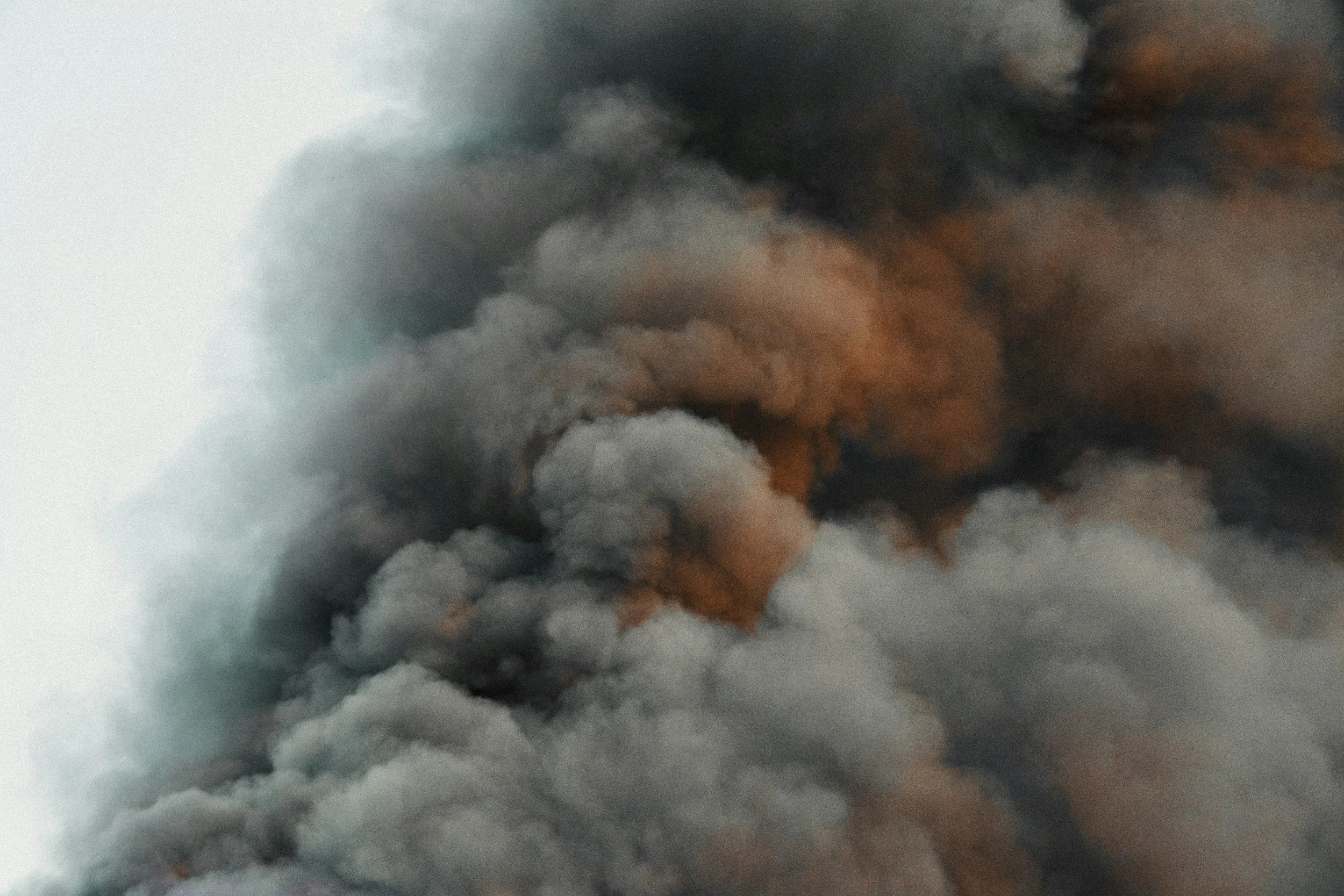
To stop the fire, rescuers turned to a drastic new approach: dynamite. By destroying buildings in the fire’s path, they starved the fire from advancing further. With the fire closing in, rescuers lit sticks of dynamite and threw them into buildings, setting off a ferocious boom that sent structures shuddering to the earth in pieces. It was a desperate last act to save Wrangell. The Alaska Sentinel wrote:
“When the fire had reached almost to the store of the St. Michael Trading Co. a small building or two was torn down forming a gap over which the fire could not leap in the face of the brisk north wind. This alone was all that saved the town from being obliterated from the map of Alaska.”
Carlyon’s store, with his collection of curios and photographs, was likely one of those establishments dynamited. It’s missing from a photograph of Wrangell taken after the fire. Oddly, his neighbor to the north, a restaurant, is still standing and unmarked by any flames at all, suggesting Carlyon’s sacrifice may have been for naught.
In the end, dynamiting buildings worked. It stopped the fire just after the bend in Front Street, saving homes and businesses down Front Street. It was an act of self-sacrifice for the greater good.
A satellite photograph of modern-day Wrangell showing the approximate area affected by the fire.
By the time the sun set at 7:23pm, the sky was filthy with smoke and ash. Four acres of Wrangell lay burned and smoldering. The incoming tide lapped against scorched pilings. Crackling embers popped and hissed late into the night.
No one had died, but hundreds were left homeless. In the morning, Wrangell would take stock of the destruction.
A photograph by John E. Worden with the caption, “WRANGELL looking S.E. showing part not destroyed by fire.” (image credit: Wrangell Museum 2000.002.016).
The Morning After
Among those left without a home by the fire were John and Nina Worden and their two young girls, Lynn and Liberty. Nina was pregnant and in her third trimester. Liberty, just under two years old, had badly burned her finger escaping, and the wound was becoming infected. Lynn, nearly ten years old, attempted to grapple with what she had witnessed. Years later, she wrote in her semi-autobiography:
“The most fearful morning in Lucy’s young life was that day after the fire... Where the town had been, with a school to go to and a church for sunday School and stores and a post office and people’s homes—now there was nothing. Not even board streets. Only sooty ashes, broken dishes, black twisted metal and smoldering heaps of coal where little fires still lingered.”
Since moving to Wrangell in 1898, John E. Worden had photographed Wrangell through many phases and faces. On the morning after the fire, John E. Worden set out to capture Wrangell at its most vulnerable.
Worden took a photo of the devastation looking south, including the area where his family’s home was destroyed. On his photograph, he wrote, “Worden’s Lot. We lost everything. We are all O.K. now. I will write soon. Jack.” This area of Wrangell was becoming known as “The Burnt District.”
The photo revealed that very little remained of destroyed buildings. A stack of bricks and steel rings around a charred barrel stood out against a gray sea of rubble.
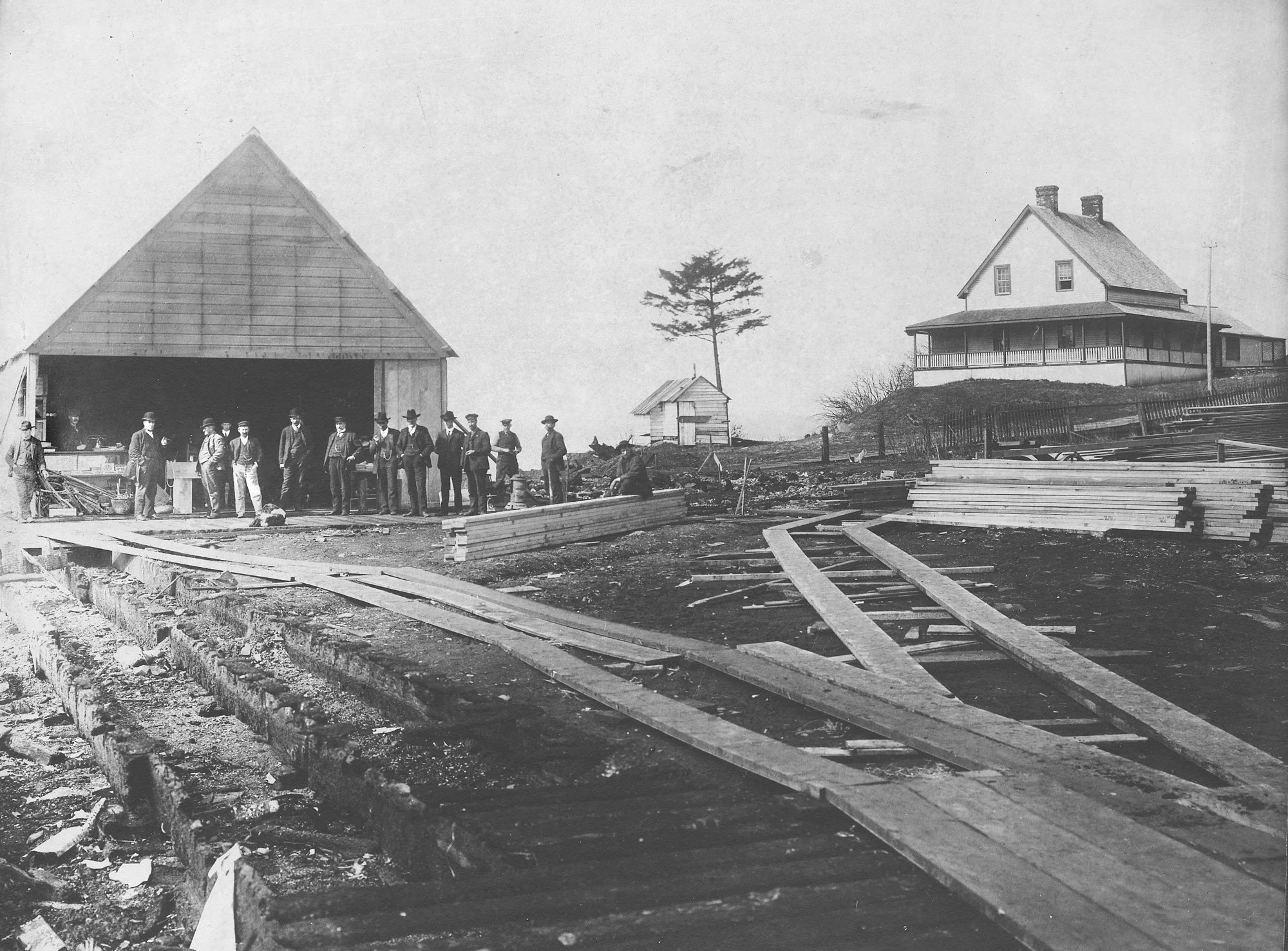
A group of men photographed by John E. Worden standing among the debris of the fire. (image credit: Wrangell Museum 1906.03.25)
Worden captured a somber photograph of Wrangell’s businesses leaders standing together on the morning after the fire. Many of them had lost buildings, some of them homes, and their livelihoods were at stake.
But the photograph showed that all was not lost. During the blaze, rescuers worked vigorously to save the Sylvester House and the Government Reserve. Including the Customs House in his photograph showed that an important piece of Wrangell was still standing. All was not lost.
In addition, the foreground of Worden’s photograph featured a crude network of plank walkways for pedestrians and hand carts. Large stacks of boards in the photograph suggested that Wrangell was wasting no time in rising above the mud and ashes.
Accusations of Looting
In the days after the fire, the only group accused of looting were Wrangell’s Tlingit citizens. According to the Alaska Sentinel’s first edition after the fire,
“The stock of goods belonging to St. Michael Trading Co. was partially removed, and a quantity of the goods were stolen by Siwashes. Some of whom got away with their plunder. About a dozen, however were caught, red-handed, and are languishing for six months ‘in durance vile.’ ”
The Seattle Post-Intelligencer of March 27, 1906 added, “While the fire was under way Indians ransacked the buildings, stealing large quantities of goods. An armed party is now in pursuit on their trail.” One month later, the Douglas Island News of April 25, 1906 ridiculed a claim by “a native woman at Wrangell who complains that she was sent to jail for six months because she saved things at the time of the big fire.”
Hot Off The Press
Among the fire’s victims was Wrangell’s local newspaper, the Alaska Sentinel, founded in 1902 by A.V.R. Snyder. When he was appointed U.S. Commissioner in 1905, he handed the business to his son, George, who continued his father’s advocacy. They used the Alaska Sentinel to promote Wrangell to the world and to encourage Wrangell to organize behind civic improvements, such as the creation of the Alert Fire Company back in 1902. In the wake of the Fire of 1906, the Alaska Sentinel embodied the resilient spirit of the time. The fire did nothing to temper their spirit.
The Snyder family faced the crisis head-on. Using what they could find, they produced an edition of the paper five days after the fire. Fifty-seven years later, the Wrangell Sentinel recalled:
“The Snyder family rescued a foot-pedal small job printing press, set it up in the alley, located some ordinary wrapping paper, hand pegged a story from a couple of cases of saved type, and got out The Sentinel with full details of the conflagration.”
The paper began with the bold headline, “Almost Nearly Destroyed: Peaceful Little Village Visited By Fire.” The issue was printed in red ink on brown butcher paper, which made it difficult to read. As the Snyders acknowledged in their editorial, “While it is not exactly as we would have it, it is the best the Wrangell market can afford at present.”
The newspaper printed a list of “Losers:”
John Sales, post office building
J.E. Worden, household effects, post office fixtures, residence on Cow Alley
F.W. Carlyon, store and about three fourths stock general merch
Robert Reid, two warehouses and office
Mrs. Sylvester, Sentinel office building
A.V.R. Snyder, printing equipment
George Snyder, printing equipment, stock, household effects
L.J. Cole, building
J.G. Grant, Wrangell Hotel, residence, coal and shed and house occupied by George Snyder
Lynch & Grant, Pioneer Hotel
P.C. Jensen, [Olympic] Restaurant
Leo C. Patenaude, barber shop and residence
H.D. Campbell, hardware store and residence
L.R. Milligan, general merchandise store and fixtures
Dr. William Hughes, office, household effects, surgical instruments, stock of drugs
U.S. Saloon
J.H. Wheeler, stock of drugs, household goods
M. Haley [Healy], store and stock of general merchandise
McKinnon estate, several buildings
Donald Sinclair, stock of goods and household effects
Edward Ludecke, shoe shop
Mamie Fletcher, residence
J. Schuler, residence
C.M. Coulter, household goods, shop damaged
Ed. Weber, residence
John Birdsall, store building
C.P. Cole, theatre building
Pat Loftus, residence and effects
As newspapers carried reports about the fire, donations came in front Wrangell’s neighbors up and down the Pacific Coast. To the north, Juneau sent 20 tons of provisions. To the south, Anacortes, Washington collected $68 for Wrangell’s benefit.
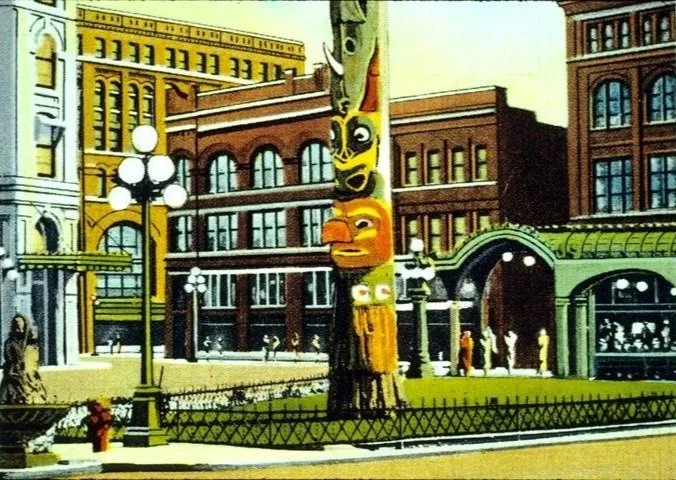
The stolen Tlingit totem pole standing in Pioneer Square, Seattle, Washington, circa 1910. (image source: Seattle Municipal Archives)
Seattle, Washington donated $108, but “that’s an insult” declared Allan Stewart, a man who had just arrived from Wrangell. Stewart pointed to the recently constructed Tlingit totem pole in Seattle’s Pioneer Square, which had been cut down and taken from Alaska without permission. In an interview, Stewart told the April 11, 1906 Seattle Post-Intelligencer:
“Wrangell needs $20,000, and Seattle should send that much at once. If Seattle does not, I will cut this totem pole down, and, after painting it red, I will take it back to Alaska, from where it was lifted out of an Indian graveyard.”
The threat proved hollow. The totem pole survived for years, until being burned down by an arsonist in 1938.
Redrawing Wrangell
On the morning after the fire, as Wrangell’s business and civic leaders gathered to plan what to do next, Mayor P.C. Jensen put forth a proposal made possible only because of the devastation of the fire: redraw the property lines.
The fire exposed a flaw in Wrangell’s haphazard, rapid growth. Buildings along Front Street were of different length, and a jigsaw network of homes sat directly behind them. The effect was a dense, impenetrable cluster of businesses and dwellings that could not be easily defended from fire.
If each building along Front Street was of a uniform length, then it would allow the creation of an alley wide enough to prevent the quick spread of fire. If there had been an alley like this when the fire began in an upstairs window in the back of the Pioneer Hotel, rescuers could have reached it much more quickly, as well. Just as important, there needed to be multiple access points to the alleyway behind Front Street so that the spread of fire could be stopped, and rescue crews could access buildings. This was the proposal that would create modern-day Cow Alley and McKinnon Street.
Bringing uniformity would require some owners to make sacrifices. Some people would not be able to rebuild on their former plots of land. Mayor Jensen was quoted in the Alaska Sentinel saying he “sincerely hoped that the town may be corrected without dissentions or unfriendly feeling arising.”
Just weeks after the fire, Wrangell effectively held a referendum on Mayor Jensen’s proposal when it re-elected him to the town council, along with P.C. McCormack, H.D. Campbell, Fred Lynch, Dr. William Hughes, Donald Sinclair, and George H. Barnes. Mayor Jensen’s ambitious plan to rebuild Wrangell along better property lines was a step towards embracing growth.
But not everyone was willing to compromise. Reports suggest at least one property owner sued over the plan. The January 9, 1907 Daily Alaska Dispatch lamented,
“It was hoped that the fire had wiped out all the petty bickerings and jealousies in Wrangell. The Sentinel intimates that they have arisen from the ashes of their burnt ambitions and still pester peaceful citizens.”
Mayor Jensen’s ambitious plan came down to money. Property owners who gave up their plots expected compensation for their sacrifice, which proved expensive. Shortly after the fire, a representative from Ketchikan, Fred Patching, arrived with $332 to help rebuild Wrangell. When Mayor Jensen asked that the money be put towards compensating those who would lose property in the redrawn lines, Patching balked. According to the Ketchikan Miner of March 30, 1907,
“...The Wrangell people, instead of consenting that it might and should be used for the purpose for which it had been subscribed and paid, insisted that it should be turned over to the municipal authorities, to be used in payment for strips of land owned or claimed by certain parties, and which were necessary to the widening of the principal business street of the town, and over which there has since been much litigation and wrangling.”
As a result, Fred Patching left Wrangell and took the $332 with him back to Ketchikan. As Patching later explained to the April 25, 1907 Alaska Sentinel:
“While speaking to Mayor Jensen, he told me that the city was badly in need of money to build sidewalks, but as the money, I was specifically told, was not to build sidewalks, and a there was no distress to relieve, I brought the money back to Ketchikan...”
Wrangell was outraged. The editor of the Alaska Sentinel called the editor of the Ketchikan Journal a “human monstrosity, that looks like a cross between an ape and hedge-hog” and “a natural born idiot.” In another edition of the Alaska Sentinel, the editor complained about the “hide-bound spirit which characterized that charitable (?) city down the channel when she sent up over $200 with a haul-back line attached…”. Once again, the editor of the Alaska Sentinel showed fierce loyalty to Wrangell and used the paper to stir up sympathies.
Wrangell would rebuild without help from Ketchikan.
(image credit: Wrangell Museum 1991.013.059)
Up From the Ashes
Among the very first structures to go up after the fire was the place where it all started: the Pioneer Hotel. In the earliest photographs after the fire, scaffolding is visible in front and back of the new Pioneer Hotel building. On April 2, 1906, just nine days after the fire, the Seattle Post-Intelligencer published an account of the progress already visible in Wrangell:
“Officers of the vessel [Al-Ki] stated that the new buildings are going up in all parts of the town. The sawmill is working day and night, and temporary shelters are being put up as rapidly as possible. Many of the people are still living in tents, and one of the restaurants is doing business under canvas covering. Two stores and two saloons are still doing business, although others are preparing to refit their places as soon as goods can be secured. Gangs of men having been employed clearing away the debris and placing the foundations of buildings in the still smoking ruins. According to the reports brought down by the Al-Ki, the damage will not exceed $150,000.”
(image credit: Wrangell Museum 1991.013.061)
Wasting no time, work began on new buildings even as debris covered much of the four acres destroyed by the fire.
(image credit: Wrangell Museum 1991.013.057)
Boards from the Willson & Sylvester Sawmill piled up along planned worksites. Progress was rapid and businesses prepared to open by the arrival of summertime customers. The April 12, 1906 Alaska Prospector reported, “A large number of merchants who were burned out at Wrangell recently are already doing business again and will rebuild as fast as material can be obtained.”
(image credit: Wrangell Museum 2003.032.022)
(image credit: Wrangell Museum 1965.012.102)
Grant and Lynch’s Pioneer Hotel went up so quickly that later historians would mistakenly believe that the hotel had survived the fire. The Pioneer Hotel was only the first piece, as Grant set his eyes on rebuilding his prized Fort Wrangel Hotel.
(image credit: Wrangell Museum 2000.002.019)
At the north terminus of Front Street, Carlyon’s Store was rebuilt better than before, in a prime position to welcome visitors arriving at Robert Reid’s Wharf. While Reid lost his warehouse buildings in the fire, his wharf over the water survived.
(image credit: Wrangell Museum 1966.003.013)
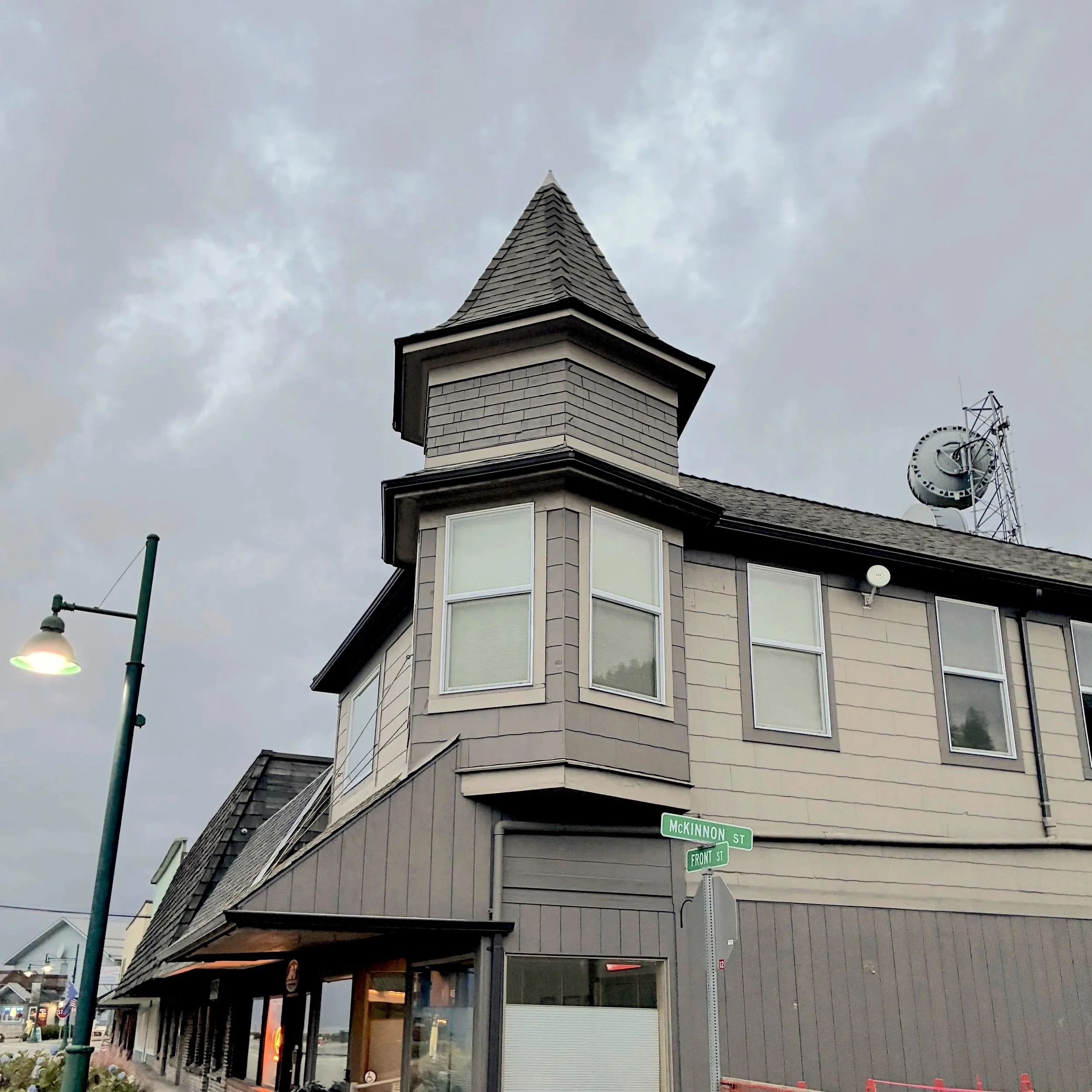
Like the former and resurrected Fort Wrangel Hotel, Leo Patenaude envisioned a building a prominent cupola overlooking Front Street. The prominent point would provide an elevated vantage over Front Street, as well as serving as a physical symbol of Wrangell’s status as a modern and sophisticated city. On June 25, 1906 the Alaska Sentinel wrote, “A new flagstaff graces the cupola of the Patenaude building, and sets it off in good shape. Jesse Crowell did it.”
The new development put a strain on resources. The August 1, 1906 Douglas Island News reported, “The Sentinel says that carpenters are scarce in Wrangell.” The Seattle Post-Intelligencer of August 26, 1906 wrote:
“The only reason the town has not been rebuilt faster is because of the scarcity of labor and especially of carpenters. Any one who can drive a nail is given work. In spite of this, however, the less fortunate ones in Wrangell must wait until the other buildings are completed before they can commence work on their own. No stops are made for rain or any other inclement weather.
The slow shipments from the Sound of material ordered as early as April, is another cause for complaint and delay. The Wrangell hotel will be completed on August 24, at which time the opening will be celebrated by a house-warming. The cost of rebuilding Wrangell will come to nearly $700,000.”
The article, entitled “Wrangell Rising From Her Ashes,” included photographs of Wrangell’s leaders: I.C. Patenaude, C. Campbell, Dr. Q.W. Stanton, Dr. H.C. DeVighne, Thos J. Case, L.M. Churchill, P.C. McCormack, Donald Sinclair, and Peter C. Jensen. (image credit: Seattle Post-Intelligencer, September 2, 1906).
The Seattle Post-Intelligencer of September 2, 1906 featured a full-page spread on Wrangell under the headline, “Wrangell Rising From Her Ashes.” The article featured photographs of Wrangell’s civic leaders, along with photographs of new buildings of the “Burned District.” The feature helped to establish that Wrangell was alive, well, and thriving.
(image credit: Wrangell Museum 1980.012.285)
Newspapers found Wrangell’s quick recovery remarkable. The Daily Alaska Dispatch of August 24, 1906 reported that the new Wrangell Hotel “is modern in every respect, electric lighted and steam heated.” On November 1, 1906, the Alaska Sentinel wrote, “Patenaude last week moved into his new building. One by one those who were run out by the fire, last spring, are getting back to their old ‘stamping grounds.’”
Mayor Jensen’s ambitious plan to rebuild Wrangell proved successful. As Wrangell ended 1906, it did so with new, modern buildings along Front Street. On November 7, 1906, the Daily Alaska Dispatch wrote, “The effect of the big Wrangell fire has been that city is now rebuilt on modern lines. Her merchants are prosperous and her citizens contented.”
This animation shows the view from the Mount Dewey from 1904 and 1908. (image credit: Wrangell Museum 2003.040.008 and 1975.002.004).
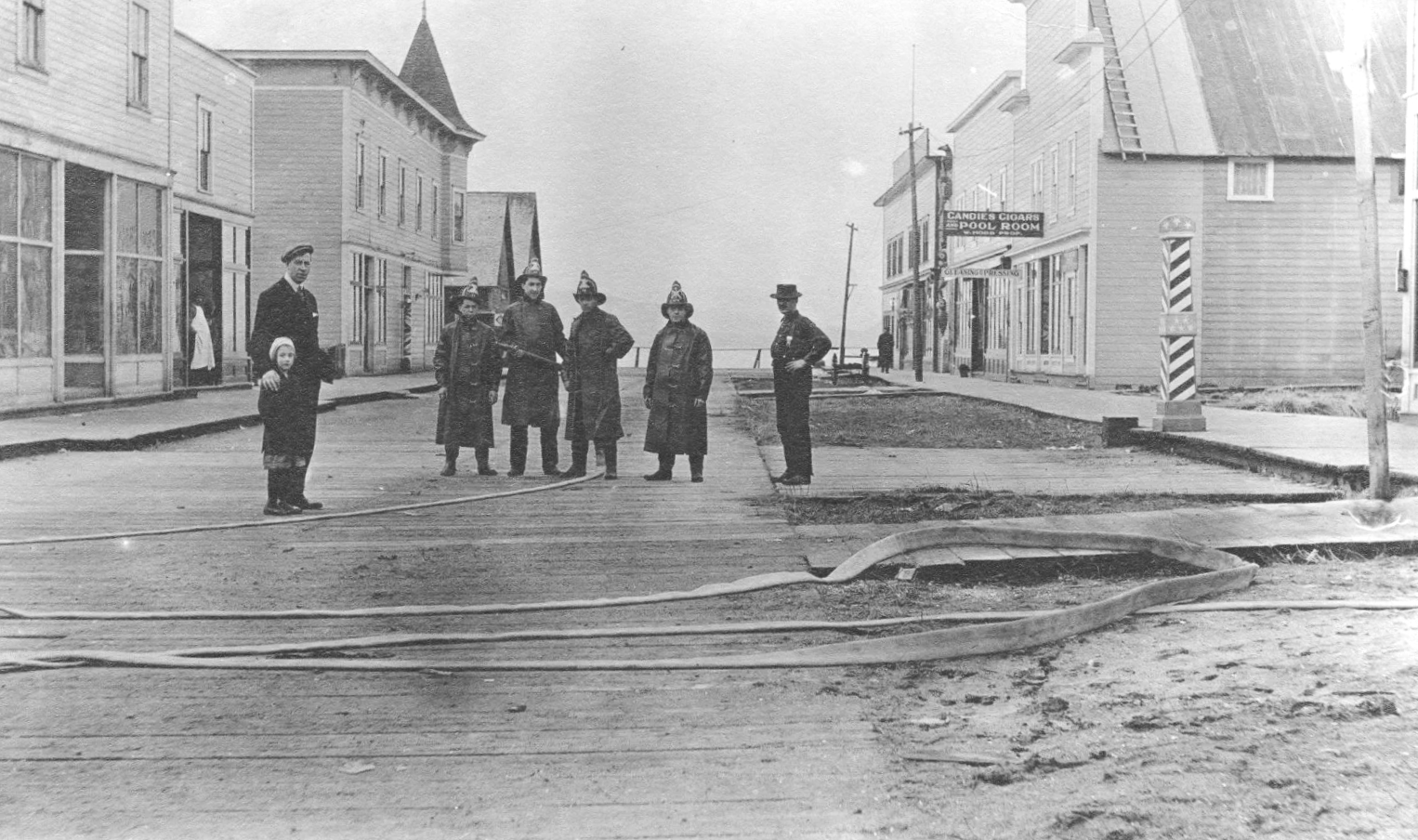
A group of firemen stand on Front Street in the former area of the “Burnt District.” (image credit: Wrangell Museum 1980.012.259)
Like a Phoenix
As 1906 came to a close, it seemed like Wrangell might actually end the year stronger than it began. The town’s fire response got an upgrade when the town council authorized twelve men to be paid to drill and practice as firemen. The council put A.V.R. Snyder and J.G. Grant—two men who had lost buildings in the blaze—in charge of the operation. Men were assigned positions: hose cart, hydrant, nozzleman, ladders, and extinguishers. The futile bucket brigade would be replaced by modern equipment and men trained in specialized skills. The Alaska Sentinel hailed the group,
“The above men have been chosen because they were thought pre-eminently fitted, and should consider this office a sacred trust, as upon their proficiency, may at any moment, depend the lives and property of their friends and neighbors, and possibly their own.”
They would not have to wait long to be tested. In January 1907, they mobilized to fight a blaze inside Bruno Greif’s Beer Hall. The building was destroyed, but the fire crew managed to contain the blaze and keep it from spreading. The group would be tested multiple times over the years, most notably in 1952, when a fire devastated Wrangell’s waterfront, sending buildings like the Wrangell Hotel up in flames once again.
New School Building
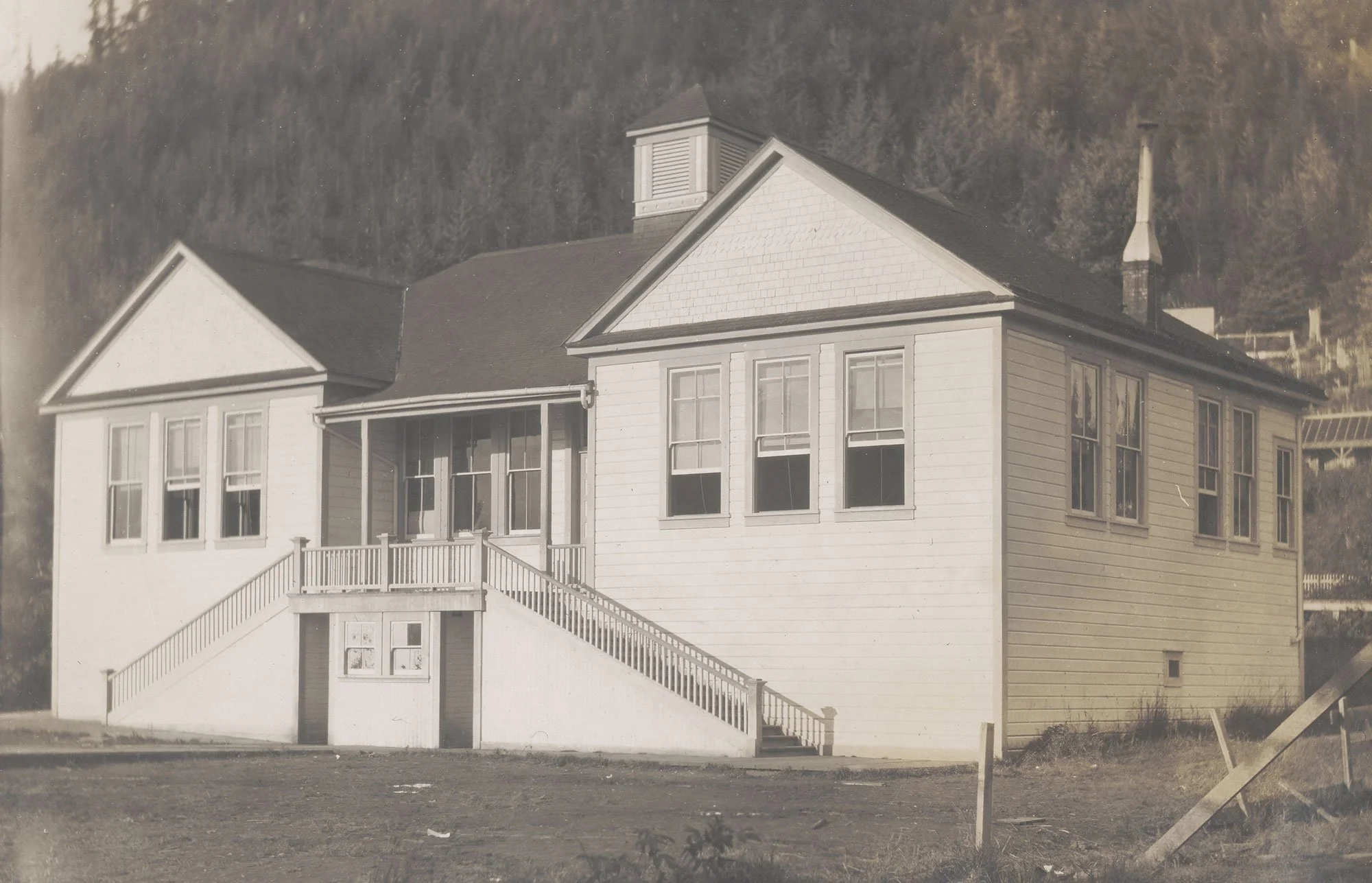
In addition to the new buildings on Front Street, Wrangell boasted a brand-new school building up the hill behind the government buildings. The school served as a symbol of Wrangell’s commitment to being a place where families could raise young children. It was a civic achievement that affirmed that Wrangell was not over.
Telegraph Line
In the weeks after the fire, the Alaska Sentinel remarked, “This fire should awaken the people to the more strenuous efforts to have that cable laid from Juneau to Wrangell and Ketchikan.” Before the year was over, Wrangell got its telegraph line. The December 22, 1906 Oregonian reported, “Wrangell, on the Southeastern coast of Alaska, was placed in telegraphic communication with the outside world for the first time today. Shore connections have been made by the United States cable ship Burnside and the office is now open for business.”
A New Chapter
For some, the fire was the last straw. Fred W. Carlyon sold out to his younger business partner, Farquhar Matheson. But others moved in, like Charles Benjamin who arrived in October 1906 and began a general store in his name that would survive into the next century. A man named Earl West reportedly left after the fire, but he returned and became a local sheriff and namesake of a cove in his honor. The ones who rebuilt became the town’s leading merchants for a generation to come.
The Fire of 1906 burned through Wrangell like a forest fire, leaving devastation in its path. But in its destruction, the fire cleared the way for a new Wrangell to emerge. It was out with the old, and in with the new. The fire forced Wrangell to cast off its gold rush past and become a modern city.
Today, one of the lasting symbols of Wrangell’s rebirth is the cupola adorning the corner of Leo Patenaude’s former barber shop on the corner of Front & McKinnon Street. The cupola went up only months after the Fire of 1906, and it serves as one of the few pieces of Victorian-style architecture still visible in Wrangell. It embodies the spirit of the time, that Wrangell was destined to survive, and the fire was not the end.